July 4, 2026|
Wickham’s Historic Gardens
Wickham has a long and proud gardening tradition, with evidence of cultivation stretching back for centuries.
Many of the houses surrounding Wickham Square still retain their medieval burgage plots. Dating from the fourteenth century, these long, narrow gardens provided space for families to grow fruit and vegetables while keeping pigs, geese and hens. An early deed even refers to “Garlykmongers Field” on Winchester Road. Whether this name derived from the abundance of wild garlic (“ramsons”) or from garlic being cultivated as a crop is unknown, but it is a fascinating reminder of Wickham’s horticultural heritage.
The earliest recorded formal gardens in Wickham belonged to the Manor House, now demolished, which once stood opposite St Nicholas’ Church. A fine avenue of trees stretched from the present-day Hoads Hill roundabout to the house, where formal gardens were complemented by dovecotes, fishponds and orchards. Cherries, raspberries and grapes were all cultivated, demonstrating that ornamental planting and productive gardening have long been part of village life.
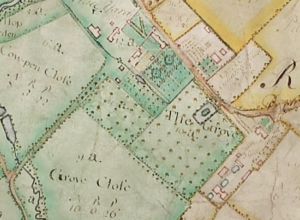
Two other notable landscaped gardens also contributed to Wickham’s rich horticultural history. An eighteenth-century country house, on the site of today’s Little Park Mansions on Titchfield Lane, had formal gardens extending towards what is now Park Place.
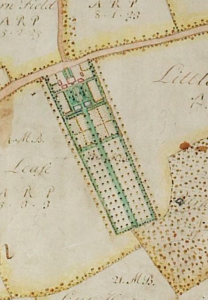
Captain Moses Baxter’s new country house on Titchfield Lane (now the site of Little Park Mansions) 1725
Charles Wynne’s house stood north of Southwick Road, close to the present-day village cricket ground, within extensive landscaped grounds. Known as Rokeby (or Rokesby), the estate passed into the Garnier family when Charles Wynne’s daughter married Paul Garnier. In the nineteenth century, the family demolished the house and built nearby Rookesbury House. The new estate was surrounded by parkland and woodland and included a folly tower together with a walled fruit and vegetable garden. Today, Rookesbury Estate remains in the ownership of the family’s descendants and provides an attractive setting for weddings, events and The Garden Show, continuing its long association with Wickham’s horticultural heritage.
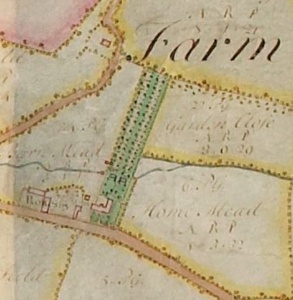
Charles Wynne’s house on Southwick Road (near the site of the Cricket Pitch) with landscaped gardens, 1725
Beverley House on Southwick Road by the Church had particularly fine gardens in the eighteenth century. They were vandalised by the “Waltham Blacks” apparently in a dispute over the allocation of church pews in 1722! They did recover however and featured in the Gardeners Magazine in 1834. The Church Fete is still held in the gardens today.
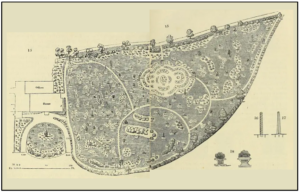
1834 plan of Beverley garden
In the nineteenth century, South East Hampshire diversified into vegetable, fruit and cut flower production for the growing London market – carts carrying strawberries queued from Wickham Station to outside the Church and local individuals like ‘Teddy’ Roberts and Alf Stubbington built up large local fruit and vegetable businesses in the twentieth century – most people in the village would have been involved with growing fruit, vegetables or flowers for sale, many with large allotment gardens. Children gathered spring primroses in the woods for sale at markets in Cosham and Portsmouth. As a result Wickham today still has many local market gardens and garden centres.
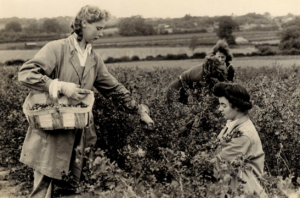
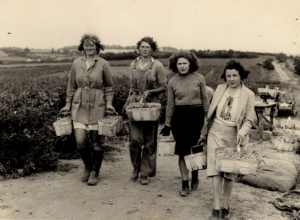
Fruit picking at Frith Farm
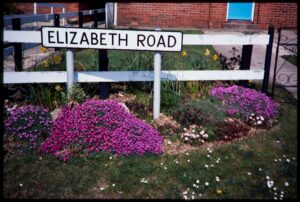
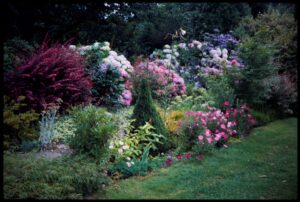
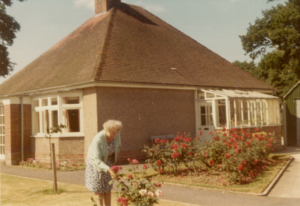
More recently village photographer Stan Woodford enjoyed photographing Wickham’s gardens in the late twentieth century ranging from flowers on Meon Park Council Estate to Admiral Norman’s grand gardens on Hundred Acres. Wickham and Knowle Parish Council regularly ran garden competitions which were very well supported and have recently been restarted.